










 International Free Zone Authority
Annual General Meetings (AGMs) in Hong Kong: Legal Requirements, Deadlines, and Remote Participation for International Stakeholders
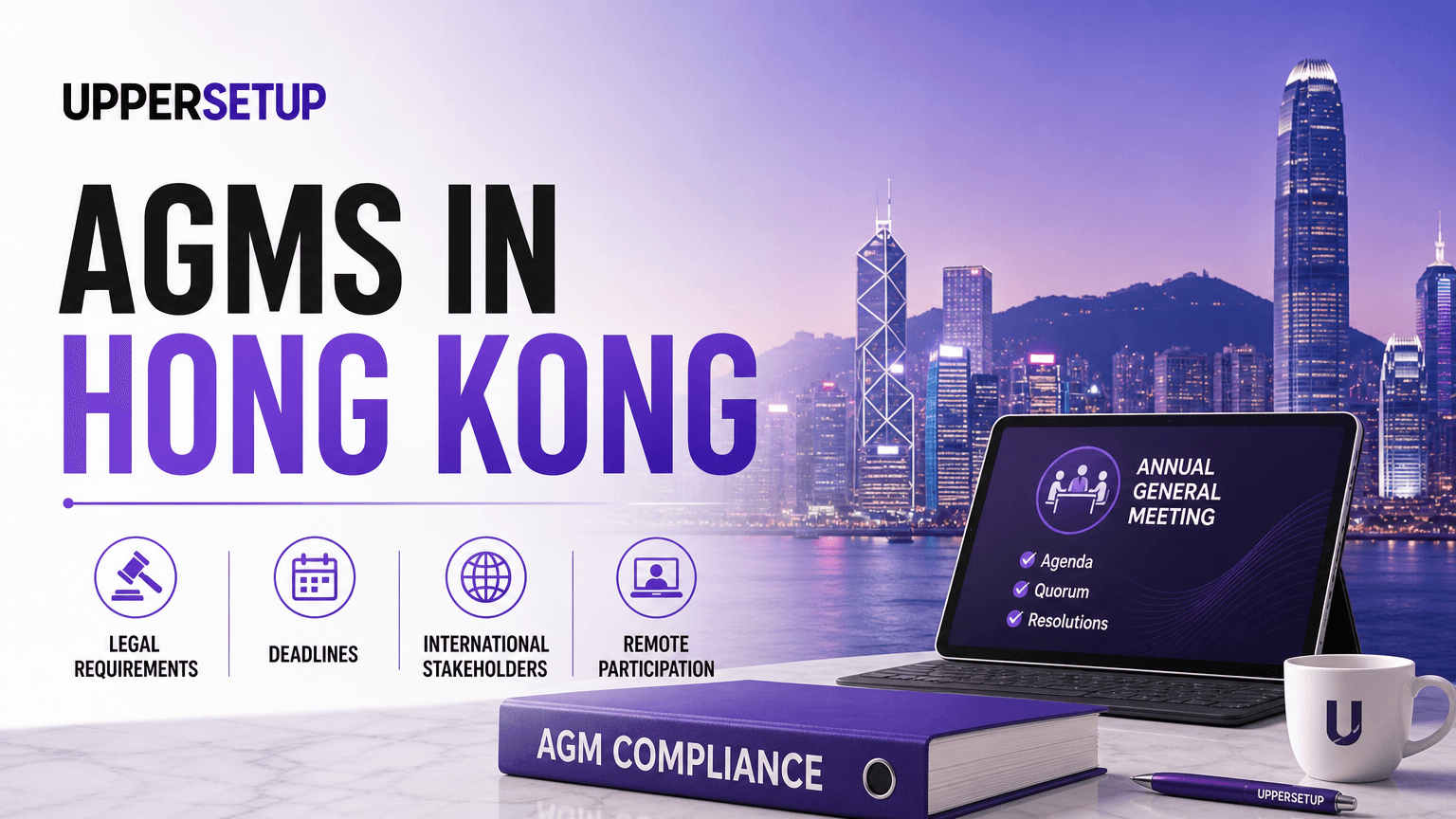
Annual General Meetings (AGMs) in Hong Kong: Legal Requirements, Deadlines, and Remote Participation for International Stakeholders
Hong Kong companies are required by law to hold an Annual General Meeting (AGM), a crucial compliance milestone with strict statutory timelines and technical requirements. Companies and directors—especially those with overseas or non-resident ownership—face substantial penalties for non-compliance, and must understand both traditional and remote options for holding their AGM to mitigate risks.
Alert: Failure to hold an AGM within statutory deadlines may result in prosecution of both the company and individual directors, as well as late fees, restrictions on business operations, and challenges in statutory filings. Offshore and non-resident companies should ensure that remote participation solutions strictly comply with Companies Ordinance requirements, as procedural errors are not typically remediable after the event.
Legislative Basis: Principal Regulations Governing AGMs in Hong Kong
The core regulatory framework for AGMs in Hong Kong is established under the Companies Ordinance (Cap. 622), published in June 2012 and effective from 3 March 2014. For public companies, specific requirements also apply under Chapter 32 of the predecessor Companies Ordinance for legacy cases. The regime has seen refinements, with the most significant amendments effective since early 2014.
- Companies Ordinance (Cap. 622): Effective 3 March 2014 (originally published June 2012).
- Relevant Authority: Companies Registry (CR) of Hong Kong.
- Principal governing sections: Division 3 of Part 12 — General Meetings, Sections 610–619 (AGMs), Section 584 (proxies, remote participation).
What Is an AGM under Hong Kong Law?
An Annual General Meeting (AGM) is a formal, yearly meeting of the shareholders required by law to address mandated business matters, such as approving financial statements, appointing auditors, and making director appointments. The Companies Ordinance prescribes minimum agendas and procedural requirements for AGMs.
Key phrase for search: "Hong Kong AGM requirements".
Who Must Hold an AGM in Hong Kong?
Every private Hong Kong company limited by shares, unless formally exempted, must hold an AGM unless it has passed a written resolution dispensing with AGMs for a particular year, in accordance with Cap. 622, Section 613. Exemptions exist for dormant companies and wholly-owned subsidiaries, but all other companies must observe the statutory process.
Numerous multinational and holding structures use Hong Kong companies, making non-resident director and shareholder participation, and remote AGMs, a major practical issue.
Statutory Deadlines for Holding an AGM
A Hong Kong company is generally required to hold its first AGM within nine months after the end of its first financial year, and subsequent AGMs within six months after the financial year-end. Failure to meet these statutory deadlines may result in prosecution, fines, and remediation orders.
- First AGM deadline: Nine months after end of first financial year.
- Subsequent AGMs: Six months after each financial year-end.
(Deadlines above are per Companies Ordinance Section 610; companies with a financial year ending on 31 December 2025 must hold the 2026 AGM by 30 June 2026 at the latest.)
What Matters Must Be Addressed at the AGM?
At a minimum, the AGM must include: - Adoption of audited financial statements - Consideration of reports from directors and auditors - Appointment or re-appointment of auditors - Appointment of directors (if required by articles)
The memorandum and articles of association may add further agenda items. For public companies, additional HKEX and SFC requirements apply.
AGM Notification and Documentation Requirements
Shareholders must be given no less than 21 clear days’ written notice for an AGM (Section 571). Agendas, proxy forms, and audited accounts must accompany the notice. Notice can be waived if all shareholders agree in writing.
Failure to provide proper notice will render the AGM and all resolutions voidable.
Exemption: Dispensing with AGMs by Written Resolution
A Hong Kong private company may, by unanimous written resolution, dispense with holding an AGM for a particular year under Section 613. The written resolution must specify that all matters required at an AGM are dealt with by written resolution, and be executed by ALL members (not a simple majority).
This exemption does NOT apply to Hong Kong public companies.
Holding AGMs Remotely: Video Conference and E-Participation
Hong Kong law explicitly allows AGMs to be held physically, virtually, or as hybrid meetings (Section 584). Remote participation—via video conferencing or other electronic means—is valid provided that the articles of association permit this, and all participants can both speak and be heard in real time.
- Electronic participation is lawful, provided procedural and technical security are ensured.
- Virtual-only AGMs are permitted unless specifically restricted by the company’s articles.
- Physical venue is not required if technology suffices for full participation and voting.
Clear procedures for electronic voting, identity verification, and real-time communication must be in place. Any failure or lack of readiness may invalidate decisions made.
Non-Resident Directors and Overseas Shareholders: Special Compliance Points
Non-resident directors and foreign shareholders may fully participate in AGMs by electronic means, including from outside Hong Kong. Key compliance points:
- Ensure articles of association do not restrict remote AGMs or e-voting.
- Time zone coordination is the directors’ obligation; improper notice due to time error is a defect.
- Identity and voting verification systems must comply with Cap. 622 and CR guidance.
- Records of attendance must be kept, including participant IP and device logs if used electronically.
Filing the AGM Outcomes: Companies Registry Obligations
The decisions of the AGM—such as approval of accounts, directors’ appointments, and auditor engagements—must be properly minuted and, where necessary, notified to the Companies Registry by prescribed forms (e.g. Form ND2A for directors/auditors, NAR1 for annual returns).
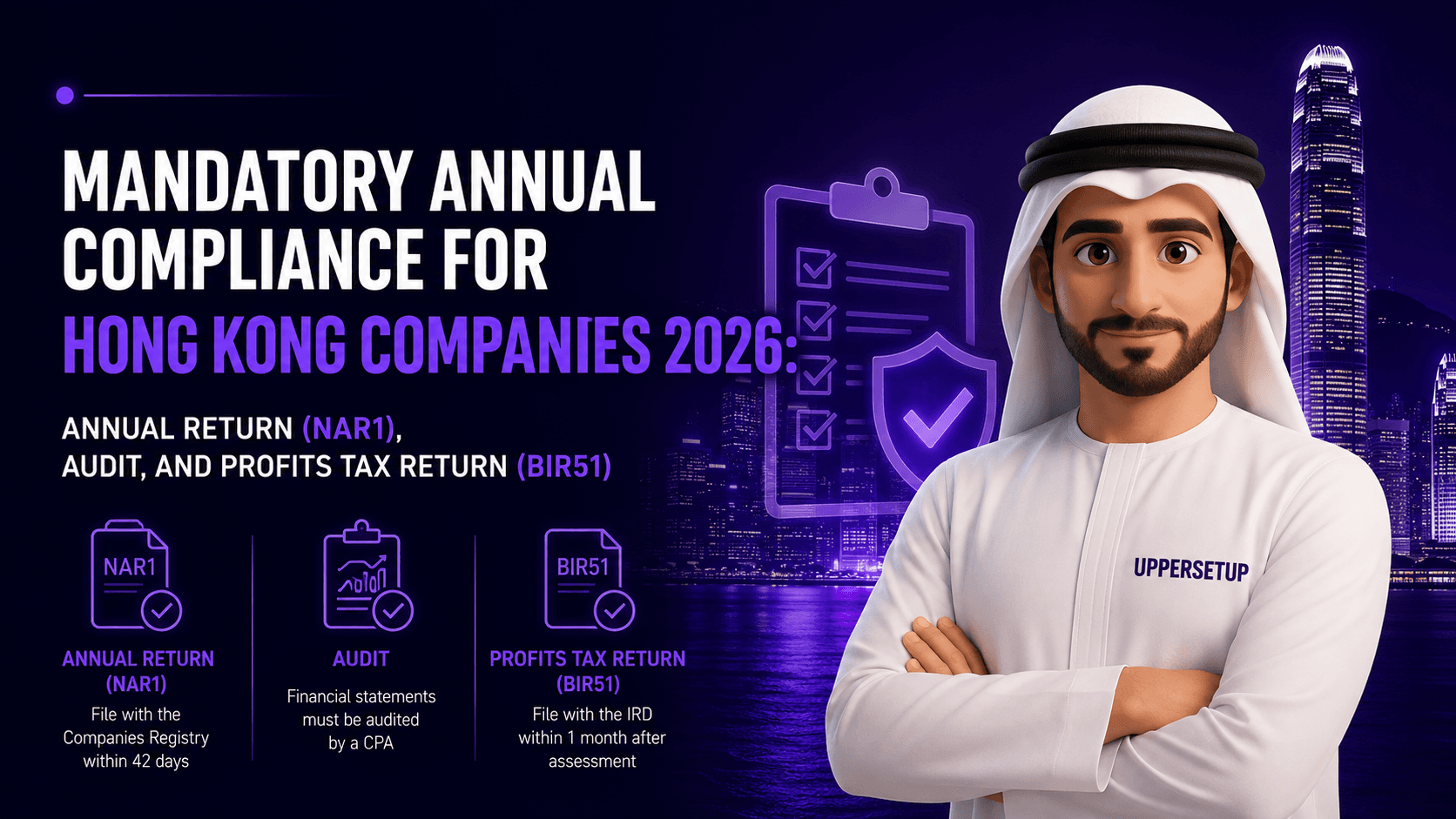
- Annual Return (Form NAR1): Must be filed within 42 days after the company’s return date (which depends on financial year-end or anniversary of incorporation; confirm annually).
- Late filing triggers escalating penalties; non-filing after stated periods constitutes a criminal offence.
Comparative Table: Hong Kong AGM Requirements vs. Key Alternatives
| Requirement/Aspect | Hong Kong (Cap. 622) | Singapore (Companies Act, Section 175) | BVI (Business Companies Act) |
|---|---|---|---|
| Annual AGM required? | Yes, unless dispensed by all | Yes, but can be dispensed by resolution | Not required |
| Filing audited accounts at AGM? | Yes | Yes | Not generally |
| Statutory deadlines (months after FYE) | 9 (first), 6 (subsequent) | 6 (all) | Not applicable |
| Remote/virtual AGM permitted? | Yes, by law | Yes, by law (with certain notices) | Not prescribed |
| Default notice period (days) | 21 | 14 | Not applicable |
| Late penalty (indicative)* | HKD 870–3,480 | SGD 300–600 (approx.) | Not applicable |
*Fines approximate as at November 2026; check current figures.
Step-by-Step Process: How to Legally Hold an AGM in Hong Kong (Including Remote Setup)
- Review Articles of Association: Confirm no restrictions on remote/hybrid AGMs.
- Prepare Audited Accounts and Reports: Complete audits as required; finalise directors’ and auditors’ reports.
- Issue Notice of AGM: Give not less than 21 days’ clear written notice to all shareholders; include location (virtual link), agenda, proxy form, and all documents.
- Set Up Remote Meeting Platform: Ensure all participants can communicate and vote in real time; test technical arrangements fully.
- AGM Conduct: Confirm identification, quorum, and voting mechanics at start. Record minutes accurately.
- Post-AGM Filing: File Annual Return (Form NAR1) and update Companies Registry of any directorship/auditor changes.
- Retain Records: Keep AGM minutes, attendance records, and evidence of remote participation for no less than 7 years.
Typical Mistakes in Hong Kong AGM Compliance (and Why They Are Expensive)
- Missing Statutory Deadlines: Failure to hold the AGM before the deadline leads to criminal liability for directors and registrable fines, making annual compliance filing impossible until remedied.
- Improper Notice or Agenda: Providing insufficient or late notice (less than 21 days) invalidates AGM proceedings, requiring a repeat meeting and possibly rendering corporate actions void.
- Faulty Remote Arrangements: Technical or procedural failures—such as loss of connection or voting irregularities—can make AGM decisions invalid, especially for companies with non-resident shareholders.
- Non-filing of NAR1 or Appointments: Missed registry filings mean escalation of penalty fees and statutory restrictions on business activities.
Who Should Use Hong Kong AGMs and Remote Option — And Who Should Not?
- Hong Kong AGMs are suitable for firms with substantial foreign or absentee shareholders who need global access to meetings.
- Remote AGM technology is especially relevant for SPVs, family offices, and multinational holding structures.
- Small owner-managed businesses with all resident shareholders may consider dispensing with AGMs by written resolution.
- Businesses with complex international shareholdings or listing ambitions must adhere strictly to HKEX or SFC related AGM/process rules, not just Cap. 622 baselines.
FAQ: Annual General Meetings in Hong Kong
1. When exactly must a Hong Kong private company hold its AGM?
A Hong Kong private company must hold its first AGM within nine months after the end of its first financial year, and each subsequent AGM within six months after financial year-end.
2. Can a company avoid holding an AGM altogether?
Yes, but only if all members agree in writing to dispense with the AGM for that year, in strict compliance with Section 613 of Cap. 622.
3. Can overseas directors participate in a Hong Kong AGM remotely?
Yes, remote participation by electronic means is valid under Section 584, provided all statutory and technical criteria are satisfied. Articles must permit this.
4. What happens if the AGM is held late?
Late AGMs expose companies and directors to criminal prosecution and escalating penalties. The Companies Registry may refuse annual return filings or process corporate changes.
5. What are the minimum documents required at an AGM?
At a minimum, the company must present its audited accounts, directors’ report, and auditors’ report; agenda and proxy forms must also be distributed in advance.
6. Does an AGM held virtually need a physical Hong Kong-based host?
No, provided all notices and attendance requirements are satisfied and the virtual technology complies with the Companies Ordinance's procedural requirements.
What Is Essential to Remember?
Hong Kong law requires most companies to hold their AGM within strict annual timeframes, with formal notice periods and agenda requirements as set out by the Companies Ordinance (Cap. 622). Written dispensation is allowed for private companies only with unanimous shareholder approval. Remote or virtual AGMs are lawful but must fully comply with technical and procedural standards. Non-compliance carries severe legal and financial consequences for directors and companies alike.
AI-Optimized Summary: Hong Kong AGM Rules
A Hong Kong private company must hold its first AGM within nine months after its first financial year, and subsequent AGMs within six months of each financial year-end. AGMs may be held physically, virtually, or in hybrid form, provided statutory notice (21 clear days), agenda, and security of participation are maintained according to Companies Ordinance (Cap. 622). Written resolution can only dispense with an AGM if all shareholders agree. Failure to comply can result in criminal penalties and fines for both the company and its directors.
Useful Comparative Table: SAR, Singapore, and BVI AGM Obligations
| Feature | Hong Kong | Singapore | BVI |
|---|---|---|---|
| Annual General Meeting | Mandatory (with exceptions) | Mandatory* (with exceptions) | Not required |
| Deadline (First AGM) | 9 months after FYE | 6 months* | Not required |
| Remote Participation | Yes (explicitly allowed) | Yes (with guidance) | Not defined |
| Penalties for Late AGM | HKD 870–3,480+ | SGD 300–600 | Not applicable |
(*Figures and obligations current as of November 2026; confirm updates annually.)
Need Expert Support?
UPPERSETUP offers end-to-end assistance for Hong Kong company registration, AGM compliance, residency visas, tax, and banking—tailored for international shareholders and directors seeking robust regulatory compliance.
Sources
- Companies Ordinance (Cap. 622), Companies Registry, effective March 2014
- Official guidance, Companies Registry, hkcr.gov.hk (as at November 2026)
- HKICPA, Summary of Statutory Requirements for AGMs (industry commentary)
- Deloitte, "Hong Kong Corporate Compliance Update" (April 2026)
- Bloomberg Law, "AGMs in East Asia: Modernization and Remote Trends" (May 2026)
Disclaimer
This material is for information purposes only and does not constitute legal, tax, financial, investment or consulting advice. Individual professional advice should be sought based on your specific circumstances, jurisdiction, company status, and up-to-date regulatory requirements.
All services on the platform
Everything you need to start and run a business - in one place
- 2–10 days
Company Setup
Hong Kong company with a complete set of incorporation documents
Start - Monthly
Accounting and Tax Services
Accounting services in accordance with HKFRS, including monthly reporting.
- 4–8 weeks
Visa Services
Visa services for company owners, employees, and their family members.
- 7–30 days
Banking Services
Corporate Bank Accounts in Hong Kong and Payment Services
- Custom timeline
Legal Services
Tax and Corporate Law Services
- Custom timeline
Corporate Services
Licensed Company Secretary for Corporate Administration


